
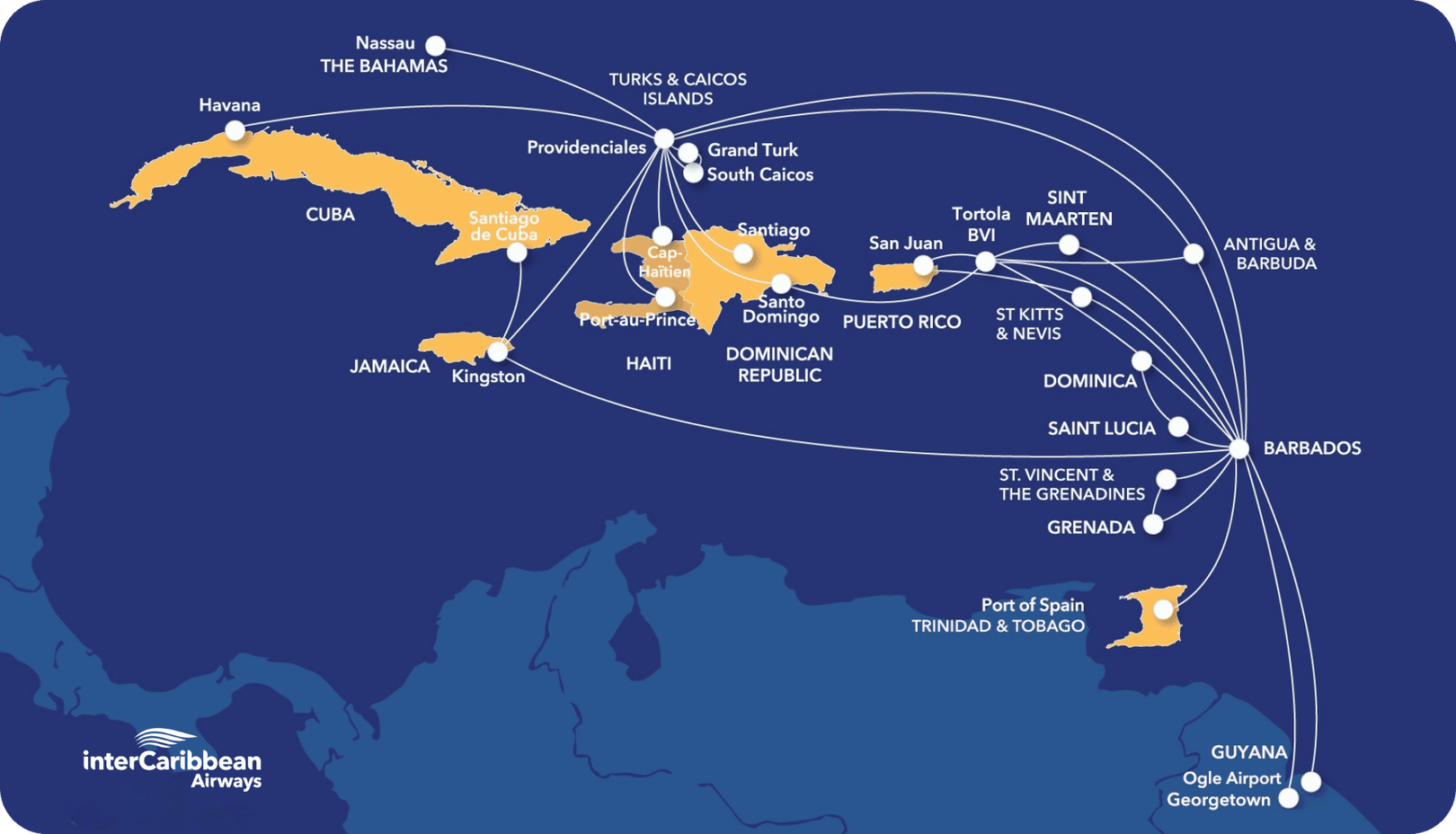
Reaching Tortola usually involves one of two routes: flying into Tortola’s EIS airport or flying to neighbouring St Thomas and continuing by passenger ferry.
Neither option is right for every traveller. The best route depends on your departure city, arrival time, budget, luggage and whether you prefer fewer transfers or a ferry journey through the Virgin Islands.
This guide explains the practical routes from the United States, Canada and the United Kingdom, along with the documents and connection details to check before booking.
Tortola routes at a glance
| Starting region | Practical routes | Important planning point |
|---|---|---|
| United States | Nonstop Miami–Tortola service when scheduled; connect through San Juan; or fly to St Thomas and take a ferry | Compare the complete journey, including baggage, taxis and ferry tickets |
| Canada | Connect through a US or Caribbean airport before flying to Tortola, or travel through St Thomas by ferry | Check US transit requirements if the itinerary passes through a US airport |
| United Kingdom | Connect through Antigua, St Maarten, San Juan or a US airport | Allow sufficient time between international and regional flights |
| Caribbean | Use an available regional connection to Tortola or travel through another BVI port | Regional routes and frequencies can be seasonal |
Option 1: Fly into Tortola’s EIS Airport
Tortola’s commercial airport is Terrance B. Lettsome International Airport, identified by the airport code EIS. It is located on Beef Island, which is connected to Tortola by bridge.
Flying into EIS avoids the airport-to-ferry transfer required when travelling through St Thomas. Visitors complete BVI Immigration and Customs at the airport before continuing to their accommodation by taxi or rental vehicle.
Miami to Tortola
American Airlines offers nonstop service between Miami and Tortola on available dates. When the schedule works for your journey, this is generally the most direct air route from North America.
Flight frequency and aircraft information can change. Check the airline’s live schedule instead of relying on an older timetable or travel article.
Connecting through San Juan
San Juan is an important regional gateway for the British Virgin Islands. Travellers can fly into San Juan and continue to EIS on an available regional service.
Before confirming the itinerary, check:
- Whether both flights are on the same ticket
- Whether checked luggage will be transferred
- The regional airline’s baggage allowance
- The available connection time
- What happens if the first flight is delayed
Separate tickets carry more risk because the second airline may not protect the booking if the incoming flight is late.
Connecting through Antigua or St Maarten
Antigua and St Maarten can provide useful connections for travellers arriving from the UK, Europe or other Caribbean destinations.
Schedules and airlines vary by season. Confirm both the international and regional portions of the itinerary before purchasing non-refundable tickets.
Travelling from EIS to West End
After clearing Immigration and Customs at EIS, travellers can continue to West End by taxi or rental vehicle.
If staying at SeaScape Villas, provide the complete destination:
SeaScape Villas BVI
Romney Park
West End, Tortola
British Virgin Islands
Prearranging transportation is sensible for an evening arrival, a larger group or travellers carrying substantial luggage.
Option 2: Fly to St Thomas and Take the Ferry
Another common approach is to fly into Cyril E. King Airport in St Thomas, in the US Virgin Islands, and continue to Tortola by passenger ferry.
This route can provide additional flight choices from North America, but it involves more stages than flying directly into EIS.
How the St Thomas connection works
- Land at St Thomas and collect your luggage.
- Complete the applicable US arrival procedures.
- Take a taxi to the correct ferry terminal.
- Check in with the ferry operator.
- Travel to West End or Road Town on Tortola.
- Clear BVI Immigration and Customs.
- Continue to your accommodation by taxi or rental vehicle.
Ferries may depart from Charlotte Amalie or Red Hook. The correct terminal depends on the operator and sailing selected.
Allow a generous connection
International ferries between St Thomas and Tortola generally operate during daylight hours. Their schedules, terminals and check-in requirements can change.
Before booking your flight:
- Check the ferry schedule for your actual travel date
- Confirm the departure terminal
- Verify the operator’s check-in cut-off
- Allow time for baggage collection and the taxi transfer
- Consider the effect of a delayed flight
- Confirm the final sailing directly with the operator
Do not assume that a same-day ferry will be available after a late-afternoon flight. If the connection is uncertain, an overnight stay in St Thomas may be more practical.
Private water taxis may be available by advance arrangement, but travellers should confirm the price, operating hours and Customs and Immigration procedure directly with a licensed operator.
West End or Road Town?
Some ferries arrive at West End, while others arrive at Road Town.
West End is the more convenient arrival area for SeaScape Villas in Romney Park, but not every ferry calls there. Choose the sailing based on the confirmed schedule rather than the destination name alone.
If the most practical ferry arrives in Road Town, arrange transportation across Tortola to West End.
Travelling to Tortola from the United States
Travellers from the USA normally have three practical choices.
Nonstop service from Miami
The Miami–EIS service offers the simplest journey when it is available for your dates. It avoids the ferry transfer and brings travellers directly into the British Virgin Islands.
Connect through San Juan
A connection through San Juan may work for travellers departing from cities that do not connect conveniently through Miami.
When comparing itineraries, look beyond the flight time. Review the ticketing arrangement, connection buffer and regional baggage restrictions.
Fly to St Thomas
St Thomas can offer a broader range of flights from the US mainland. It may be a useful alternative when flights to EIS are expensive or inconvenient.
However, include the ferry fare, airport-to-terminal taxi, baggage charges and possible overnight accommodation when comparing the total cost.
Travelling to Tortola from Canada
There are currently no direct scheduled flights from Canada to Tortola. Canadian visitors normally connect through a US or Caribbean airport.
Possible route patterns include:
- Canada–Miami–Tortola
- Canada–San Juan–Tortola
- Canada–St Thomas, followed by ferry
- Canada–Antigua or St Maarten, followed by a regional flight
Available routes from Canadian cities can be seasonal. Check the full itinerary for the actual travel dates rather than assuming that a connection operates throughout the year.
If the journey passes through a US airport, every traveller must meet the applicable US entry or transit requirements.
For separately booked flights, allow a generous connection in case luggage must be collected and rechecked.
Travelling to Tortola from the United Kingdom
There are currently no direct scheduled flights from the UK or Europe to Tortola. UK travellers require at least one connection.
Practical gateways can include Antigua, St Maarten, San Juan or a US airport.
Connecting through the Eastern Caribbean
A connection through Antigua or St Maarten can avoid transiting the United States. The international and regional schedules must still align, and some connections may require an overnight stay.
Where possible, book the journey on one itinerary. If separate tickets are necessary, leave enough time for Immigration, luggage collection and rechecking.
Connecting through the United States
Travellers passing through a US airport must meet US entry and transit requirements. Depending on nationality and personal circumstances, this may involve an ESTA or a visa.
Verify eligibility before purchasing the itinerary. Do not assume that different rules apply simply because the United States is only a connection point.
BVI entry documents and requirements
Entry requirements can vary by nationality and may change. Travellers should consult the official BVI authorities and the travel advisory issued by their country.
As a general preparation list, carry:
- A passport that meets the applicable requirements
- A return or onward ticket
- Confirmation of accommodation
- The address of the BVI accommodation
- Any visa required for the traveller’s nationality
- The completed BVI digital Entry and Departure Card
Complete the digital BVI ED Card
The BVI Entry and Departure Card is mandatory and free. It must be completed through the official government system within the permitted 72-hour period before travel.
Travellers will need:
- A valid email address
- Passport information
- A clear image of the passport information page
- Arrival and departure details
- Airline, flight or vessel information
- The address of their accommodation in the BVI
Keep the confirmation accessible on your phone. A printed backup can also be useful.
Use only the official BVI Government portal. Avoid third-party websites that charge travellers to complete a free form.
Current visitor levy
A US$10 Environmental and Tourism Levy currently applies to non-resident visitors arriving by air or sea.
Separate departure charges may apply and may sometimes be included in an airline ticket. Check with the airline or ferry operator before travelling.
Final travel-planning checklist
Before purchasing non-refundable tickets:
- Confirm the international and regional portions of the itinerary
- Check whether flights are issued on one ticket
- Verify luggage allowances for every airline
- Allow a generous connection between separately booked flights
- Confirm the ferry terminal, schedule and check-in time
- Check passport, visa and transit requirements
- Complete the BVI ED Card within 72 hours before travel
- Save your accommodation address and confirmation offline
- Arrange transportation from EIS, West End or Road Town
- Reconfirm schedules shortly before departure
Airline and ferry operations can be affected by seasonal demand, weather and operational changes. Current information from the airline, ferry company and BVI authorities should always take priority over a travel article.
Stay in West End, Tortola
SeaScape Villas BVI offers four self-catering one-bedroom villas at Romney Park in West End, Tortola.
Each villa accommodates up to four guests and includes a kitchen, Wi-Fi, air conditioning, laundry facilities, shared parking and backup power. The villas differ by floor, size, outlook and outdoor space.
The West End location provides a practical base for exploring Long Bay, Apple Bay, Smuggler’s Cove, Soper’s Hole and the wider British Virgin Islands by car, taxi or ferry.
Compare four one-bedroom villas in West End, Tortola